Thursday, September 14, 2006

After Sorrow Comes Joy: Viet Nam


The most important people in my life: Family

All of my grandkids together in Colorado 


Maya and Alex graduation at CU 
Our family in 1975

Tushar and Shauna 
Katria BEFORE the Super Bowl 

Dan, Beth and I on the first US delegation to travel up the road from Saigon to Hanoi since 1975. Here we are on an abandoned tank, 1988

Brian near Jerusalem 


Preya with her Ammaji 

Shauna with her Ammaji 
Thanh and family! 


We are Bronco's 

Notes From My Heart : Palestine


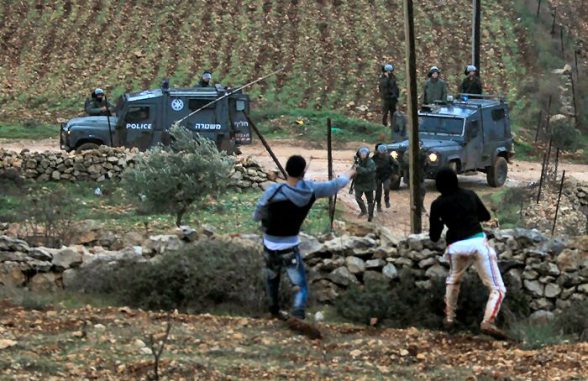
Susann and I trying to get to Jerusalem in a van full of Palestinians from Nablus on a backroad when these two guys appeared by jeep, helicopter above and spotted us. The rest of the passengers took off and we remained for a couple of hours until Ashraf could help us out of our mess. In that our only crime was trying to get to Jerusalem because of the roadblocks ... they set us free!


Some of my thoughts:


Why Didn’t You Do Something?


Why Didn’t You Do Something?
February 27, 2003
Cherie Clark
One of my earliest memories is of the Nuremberg trials. I remember the black and white TV and my mother explaining to me what had happened to the Jewish people in Europe. As young as I was, I would always ask, “Why didn’t you do something?” The answer was that there simply was no way to help; there was nothing we could do.
When I was a bit older I read The Diary of Anne Frank. I even incorporated a part of her story into my own diary. It seemed she was the only person who could understand my feelings of being not quite a teenager and having no one with whom to share my innermost feelings. Later I visited the home where she had been incarcerated with her family – it is now a museum.
Today, I live in a dormitory with young girls just out of their teens who are attending the An Najah University here in Nablus, Palestine. I wish that Anne could meet them. I wonder what she would say about the lives they are leading. Things are not so different from what she described in her diary. The sad fact is that it is Anne’s own people, who learned so well the tactics of the Nazis, who are destroying not only the lives of the indigenous people of Palestine, but also their culture and their future. If we were to make a museum of every home in Palestine that contains suffering, dying victims of this occupation, it would be the world’s largest museum, covering an area that is home to several million people.
Will people someday walk these roads and remember that this is where the little boy died who was killed four days back for simply helping his grandfather reach medical care? He held no stone, he was walking away from the soldiers – and he was shot and killed. His grandfather died in the hospital a few hours later. Will we erect a monument for him and cry for the injustice? If so, then the roads will not be passable, for there will be far too many monuments to those who died for no reason. The soldiers fire their guns as though bullets were cheap – frequently, and without asking questions.
As soldiers entered a house less than a city block from me, a few days ago, they were announcing over a loudspeaker that they were looking for one particular person. Others began to get out of the way, and in doing so were shot and killed. Murdered. An apartment resident rushed outside to move his car. The soldiers shot him dead and ran over his car with their tank. They proceeded on to kill three more people and wound twenty-two as they went about their search for one wanted man. One of the wounded is an ambulance driver.
Nablus
This news never made the mainstream press. CNN was far too busy reporting the death of four Israeli soldiers in a tank that was blown up in Gaza on Palestinian land. The only news worthy of reporting was that Israel was trying to wipe out the terrorists responsible, and that many in Gaza were killed. Some of these “terrorists” that the Israeli government killed were toddlers. There were no apologies, and there are no excuses. In the minds of those who control the military forces here, the Palestinians are no more human than the Nazis believed the Jewish to be. Their deaths bring no sadness to the world, and their funerals are covered in the news with stories of how “Hamas is vowing revenge” and pictures of angry young men carrying a flag-draped body.
Who are these angry young men? They are people who see one of the greatest human tragedies occurring on their own land, to their own families, and who dare to care too much and to try to do something about it. These are real people who fall in love, have children, get married, and are extremely well educated. More than half of the students in this university are women. The girls who live in my dorm are all studying engineering. I admire their ability to hope and to study, under the most difficult circumstances, for a future that I find impossible to see.
For me, doing something means being here. It means being a witness–a witness to such a grave injustice that it often brings unbearable heartache. But sometimes it brings a raging anger and pain that Anne Frank would surely share with me, had she lived to witness it. Like many young girls here in Palestine, Anne’s life was cut off before she could mature and grow. This is a daily occurrence for the children of Palestine. In my mother’s time the Jewish people were killed; now it is the Israeli soldiers who are killing a people and their children.
Certainly one of the most vocal opposition groups to the current holocaust are Jewish people. I respect the Jewish people who are speaking out against this atrocity more than any other group – who are working for the rights of the Palestinians. Many young Israeli men are currently in prison for refusing to serve here in the occupied territories. Their lives are no doubt made difficult and painful. But in this apartheid situation, it is a relief to find that there are some who have the courage to resist and, by going to jail, to do something. They are taking a huge risk and have chosen to look at the most obvious facts. The excuse that I often hear from many Americans, as well as Israelis, is that they “simply didn’t know” what is going on. But it’s hard to be that blind now. Most of us can read, and the truth is readily available through the alternative media.
The United Nations is mocked by Israel while collective punishment, mass murder, and this constant reign of terror are ignored. Why have UN sanctions not been applied against Israel for their violation of human rights and for their continued mockery of the UN charter? That “why” is spelled U.S., not UN. With continuing U.S. support for Israel there will never be peace. Peace would mean the end to the billions of dollars that flow to Israel each year from the U.S. No, Israel will never submit to peace, nor will America allow her to do so. That would mean losing the foothold here in the Middle East that holds the huge U.S. military–sponsored arsenal.
The world might have rejoiced when the Berlin Wall came down, but it is certainly ignoring the Israeli wall that is going up. Yet this wall might at long last mean that there will be a Palestinian state. It will be a state behind concrete walls, cut off from parts of itself, patrolled by Israeli guards, and reinforced with electric bolts to keep everyone in. Such a state will be the world’s largest prison. Already the walls are going up, and further land is being confiscated. Refugees from the area already stolen by Israel are now in overcrowded refugee camps dating back to the 1940s. I just spent three months living in a refugee camp and I have yet to find words to describe the day-in, day-out terror we were subjected to. Soldiers driving by in their tanks would simply fire aimlessly into the camp – just a way of saying “we are here, we hate you, and don’t forget it.”
Today I am in the city of Nablus, just up the road from that camp. This city is thousands of years old and is mentioned in the Bible almost 75 times, as Shekum. It is here that Jesus, a person who saw a wrong and tried to right it, and was thought by many to be a renegade, stopped and drank water from a well near where I am writing. Today, making that walk would probably be far more complicated. Would the Jewish soldiers classify him as a Jew, or simply a “troublemaker”, at their humiliating checkpoints? Would he be arrested or left to stand in the freezing rain? Would he be shackled and handcuffed and left to sit in the mud? Or would he be forced to strip naked, as so many others are on a routine basis?
If he were to be declared a troublemaker, there would be no nice shelter to stand in, with windbreakers on three sides, as is possible for the Jewish settlers waiting for the bus. Jesus might find himself on the wrong side of an Israeli checkpoint, and he would discover that the roads around this unholy land are as difficult to maneuver, and as cold and forbidding, as when he tried to spread a new word about loving your neighbor two thousand years ago.
You can still get hung on the proverbial cross here, but it is easier simply to shoot people apparently, preferably the very young. Thirty-eight percent of the war deaths here in Palestine are children. My personal experience caring for people with gunshot wounds to the head is becoming far too common.
I had never imagined Jesus growing up in such a cold place, as our Bible didn’t portray the winters here. It is a damp and humid cold, without the oil supplies that are so essential to our American way of life. The people must depend on the most primitive means of heating their houses. During such a total occupation, even food is often not available, let alone heat.
The military invaded the old city of Nablus without warning a few days ago. This is one of those beautiful, old, open-air places with historic arches and clean paths leading through a market that sells clothing, food, and just about everything else you could look for. This is the precious heart of Nablus, home to thousands of people who live above their shops or in private homes in the old city.
When the soldiers invaded, they used the American-supplied weapons to tunnel their way from house to house. Their tanks and all of their armored vehicles sat below my window as the soldiers gained the confidence to proceed on foot. To move between houses, they used explosives to blow holes in the walls, leaving the children and families to face an even more hostile environment. The soldiers looked like rats sneaking along beneath the window where I stood watching them. They paused, scurried, and moved as though they knew they didn’t have the right to be here.
Many of these soldiers are first-generation immigrants, brought in and used as fodder for the war machine. Israel has no jobs for the Arab natives, who are imprisoned in their own homes and in refugee camps in Palestine – yet they have brought in 25,000 Thai citizens to work and farm their stolen land. There are thousands more immigrant workers here from all over the world. Twenty thousand Ethiopians have recently been given permission to immigrate here, perhaps to be used in this one-sided war and also to do the work that others find beneath them. By cutting off the indigenous Arab population of three million, Israel finds itself in need of those who actually want to farm this land.
On Thursday, February 20th, 2003 – my day off from my work at the An Najah University – I joined the United Palestinian Medical Relief Center in the old city to try to bring some relief to the families trapped inside their homes. They were not able to leave, or to even look out their windows, for fear of being shot. News had reached us by cell phone of desperately ill people trapped in their homes. With well-armed soldiers in bulletproof vests surrounding us, we set out from the clinic, wearing white cotton vests that identified us as working for medical relief. As an American woman, I often walked in the front.
We carried medicine bottles above our heads to show that we were only bearing medicine as we moved through the small homes of the people. These homes, built long ago, have low, narrow doorways. We stooped to enter these ancient homes that had already been “searched” by the soldiers. In one, an elderly woman sat weeping in the corner. While passing through, the soldiers had simply broken everything. Here was a broken chair; there was the television set, no doubt earned by hard work, and now utterly smashed. The woman stood to greet us. She asked us to sit, to take tea. We explained we were only moving to help people, the children first. She brought out her pale, young great-grandson, only about seven years old. The side of his head had a huge lump and there were bruises on his face. The soldiers had hit him with their rifle butts. The child looked sickly at best, and was thin and malnourished, as are so many of the children of Palestine. My grief was quickly turning to anger.
What unearthly cause could have allowed a soldier to strike this child? Why? My only thought is that the Palestinians must not be seen as human in the eyes of those who do this. I have seen too many people left to sit in the mud for hours in pouring, freezing rain, while the soldiers laugh and exchange jokes, to believe that striking a child is not done routinely. After all, there’s the danger that he might grow up.
Nabluschild
We moved through many houses. All of the children were sick and coughing. The doctor had brought antibiotics with him, and we gave injections and moved on. As a nurse, I would have hospitalized half of the babies for respiratory distress, but this was not an option.
We came across a shop owner. When the soldiers made their rapid advance into the city they captured almost anyone on the street. This man was merely closing up his shop, trying to protect his livelihood. The soldiers took this elderly man from the road and held him shackled as a prisoner in the cold rain for more than twenty-four hours, with only a sweater on. He was now coughing and deathly pale. We returned to him hours later and discerned that he might be having a heart attack. The dilemma facing the medical team, as I moved on with the next group, was how to get him to the hospital. There were soldiers everywhere, in front of us and behind us. To them, for this man to die was simply of no consequence, or perhaps it was part of the victory.
In the house of one family I held a baby girl burning with fever and coughing. She was too sick to protest my alien looks. I have spent enough time in Israel to know that they have some of the best medical facilities in the world. Why was this child so ill and so ignored by the world?
The soldiers have a mission in the old city. They are here to blow up stores, buildings and homes with explosives that implode. Minutes after leaving the first group, we come across a shop that had just been demolished. The air still carries the caustic smell of burning plastic and rubber, and soon we are all coughing. A refrigerator is lying with the door blown off, a sofa is upside down in the rubble, a toy is here, clothing there. Another family is homeless. It looks so different, as I stand here, versus staring at the television or photos. Here is a family who has lost everything. Only their good neighbors will help them pick up the pieces. A few feet from the building, part of the ancient archway has been destroyed. Just days ago I was walking through this part of the city, still intact. Now it looks as though there has been an earthquake.
I finally leave the group and stop to have some hot tea at a hotel. It’s fairly new, built in the old city only a few years ago, and is partially open. The soldiers entered it last night and arrested one of my favorite waiters. I hear about the ridiculous questions that were asked of the staff as the soldiers entered. This is a large area where anyone might stop in for tea or coffee. The waiter was arrested because the soldiers asked him if terrorists come there. Perhaps he should have said, “Yes, you are here before me.” As it is, they arrested him. One becomes accustomed to this nowadays. No justification is needed to arrest anyone. They can be held in the most desolate conditions under what America now calls “administrative detention.”
Through my work at the university, I have found that many of the educated elite are following in the steps of Dr. Martin Luther King, Gandhi, Nehru and Nelson Mandela. They have all been arrested, imprisoned, beaten, and humiliated. But they have all picked up and gone on. They are, after all, Palestinian men. One of the peace activists, whom I came to know and love during my stay in the Balata Refugee Camp, is currently being held. There has been no attempt by Israel to explain why he is arrested, although Amnesty International has now taken up his case. We only know that he was taken off the road with a group of human rights activists who were trying to help ambulances pass through checkpoints and to make life easier for the people. This is the crime. The latest news is that three people were killed yesterday. It is hard to confirm and the numbers keep rising. The numbers do not seem to matter much, outside our circle here in Nablus, until one person has finally had enough. Until one person finally says “I have to do something,” and crosses over that line and commits his fatal crime. Then the world will focus again on Palestine and the terrorists here.
Until then, the true terrorists, who are in Washington this week to ask for $8 billion more U.S. dollars to continue to kill, maim, and destroy, live a comfortable life, well provided for.
What if we would have done nothing?
Cherie Clark
Nablus
The Old City
Occupied Palestine


Sunday, August 13, 2006

My Last Trip To Iraq 2004

Report from Cherie Clark --- on location inside Iraq
March 7, 2004

Friends,


Many days have passed and many people have died since I began writing this. I have had so many emails asking if I am "okay" that I thought I would try to send this out today as I am in Pakistan getting ready to leave for Afghanistan tomorrow. Many of my impressions at the moment would be quite different if I were to take the trip today. Such as my trip to Basrah. We passed through many checkpoints which are now set up along the road with Iraqi security. For the most part these were routine and nothing compared to the humiliation and difficulties in traveling in Palestine but two of the American's recently killed in Iraq were killed on the day I returned from Basrah and they were stopped at a false "roadblock" which was actually a set up with armed men dressed as Iraqi police who shot and killed two American women and their translator. The hotel which was bombed yesterday in Basrah is where I stayed and wrote some of this from.

So this is what I saw but absence a great deal of the pain of knowing how deeply the Iraqi people are suffering and how terrified they are. There is simply no way I can convey the collective mental state of the people I met. One kind man told me of how during Saddam's time they "walked close to the wall" and did not make their feelings public. This is life under a dictator. Now he told me that he has withdrawn his daughter from school and only allows his son to attend on sporadic occasions and lives in daily fear when he is away from his family. He has not washed his car or repaired the broken windshields to make it a less attractive target for being stolen or shot at as he works for an American based NGO.

Today is the 7th of March evening here in Baghdad and we reached yesterday about twenty-four hours ago. Last week was the bloodiest week since the war "ended" with the attacks in Kerbala and Baghdad and yet we were beginning to talk about how things looked somehow better until minutes ago when I heard blasts and went to the window with hotel staff. We can still see the smoke rising above the so called "Green Zone" just down the road and the former Al Rashid, now a US Military headquarter. Strange that both Vicki and I felt that we simply did not want to stay inside the Green Zone even though we had a reservation there. We pulled up to the entrance which is heavily guarded as this is where all the news groups as well as many aid agencies stay, we were sent around to another entrance and showed our passports again and then decided to opt for a smaller hotel down the street where Vicki has stayed in the past. I feel pretty good about that decision as it is difficult to say how many rockets hit as it only happened a half an hour ago. So although I hear sirens, see and smell smoke I really don't know what happened! To try to keep my mind off of the immediate I think I will go back to my writing about what our trip over here was like.

We left at three in the morning and were at the Iraq boarder by seven. We made excellent time despite the fact that on the Jordanian side the road is not too good but was virtually empty. The night before we left my friend Vicki arrived in the room with news that there were six car-jackings on the road the day before. One of her colleagues was car jacked and lost everything including his belt in broad day light. I hid my limited cash in various places including an old pretzel bag that I filled with tissues to look like trash.

Today I got to hear first hand just what had happened. A car pulled up along side of that of a new friend and he was forced to the side of the road. Two men held guns to his head in broad day light while another held a gun to the head of his driver while they took his belongings. This is very common and often times they steal the cars too.

Fortunately on our journey the biggest problem we faced was trying to keep our driver awake! He kept nodding off and when you are starting off across the desert on such a long journey this is not easy. We literally kept shaking him to keep him awake! To further keep him alert I even practiced my Arabic on him.

We reached the border by seven in the morning and were the first to pass out of Jordan and into Iraq. With both of us dressed in Hijab and looking like proper Muslim ladies no questions were asked on either side. My first trip into Iraq back in 1999 was quite different. Once we entered the Iraq side we were taken into a large and rather plush reception room with two wall size photo's of Saddam and were served Tea as we waited for our visas. The last times I have gone in there have only been a US tank sitting there with no boarder checks at all. This time the "reception area" was just a dirty glass booth with broken chairs, trash piled everywhere and one officer. There were no American tanks as was the case when I passed through in recent times. I saw three American's in the distance but they were on the other side of the road. Hard to miss those camouflage uniforms they stand out quite well against buildings. The Iraqi guards were not in uniform at the boarder but down the road we passed a police truck and the guys had on blue uniforms with the traditional red and white checkered scarf around their faces to keep the wind out of their face which looked odd for lack of a more descriptive word.

Well we just lost all power. Always reassuring to work off a lap top even though we have no internet connection. I hear sirens in the distance now but feel closer to everyone as I write. The strange thing is that when you are not here you can watch TV and have some idea what is going on but from here I have no idea except I smell and see smoke.

Back to yesterday! Once you pass into Iraq the highway becomes a modern four lane with a dividing line and other than the fact that all of the steel barriers have been torn down. I have learned that the metal everywhere is scavenged and used to raise cash with. So much has to be guarded including power lines so that the posts will not be taken away and stolen interrupting the sporadic electric supply.

We saw young guys playing football and the stores were well packed in the few truck stops we stopped in with just about everything but gas we had to stop in several places to find that. My last trips in the stops were closed and there was nothing much for sale. Now there is plenty of water and any kind of soft drink.

By the time we were approaching Faluja where the recent robberies have taken placed we came upon the largest military convoy that I have ever seen. I counted 50 tanks each fully armed and truck upon truck of American soldiers. The supply and gas tanks were also following. I lost count when we had passed two hundred vehicles. Using my best Arabic I asked the driver where the American soldiers were going and he said out of Baghdad. Whatever that meant. So we passed through the more risky areas without event. However as we came into the city we began passing tanks which were also armed rolling in to the city that were loaded onto huge trucks. The number leaving was definitely higher! but there were at least 25 going in.

We set off to find something to eat and that was easy. Clean and decent food. Again something very new to me. People were walking about and I was pretty impressed with the number of shops that were stacked with televisions and air conditioners. We roamed the streets and felt quite safe. When Dan and I were here the hot item on sale was Satellite's. Now it seems that the number of stores selling Mobile phones are in the majority. I have heard that the phones do not work well because of the heavy equipment all around and are very expensive to use. We attempted to find someone to help us with out Satellite phones as neither one was working. We were pretty fortunate to find a group of men on the corner who Vicki asked for help and suddenly we were surrounded by a huge number of people all ready to fix the phones. It worked and I was able to call Ron in Viet Nam to let him know that we had reached safely.

The power has been off more than it was on today. We were out and about in the city today. Any real work for me will not begin until tomorrow when I will begin visiting some clinic's, hospitals and orphanages. We head down to Basrah on Tuesday though we are being encouraged not to stay down there as the place we hope to visit is where 7 British soldiers were just attacked. I did manage to make it to a business center today with ten computers but could only write to a few of you as I don't have addresses in my Yahoo account. They encouraged me to bring this thing back tomorrow and said they would connect it. I have most of my addresses in my laptop. The best news was that I got so many emails from Palestine from good friends. The news is so depressing from there as always but everyone is so gracious and full of good wishes for whatever I do.

There is rarely electricity so each building seems to have a generator this leaves for an acrid caustic pretty dirty air quality. I was impressed that in the internet shop there was a sign that stated, "Smoking is not healthy for Other People". This sign in light of the tape on the windows to reduce the glass that shatters when explosions go off and the bullet holes in half of the windows made me laugh. The one thing I have learned in such situations is not to let your sense of humor run down!
Signing off for the night! Hope that we get some news.........soon. Cherie

11th March, 2004

Greetings from Basrah. I have been down here for several days and have had a wonderful experience so far in meeting people hard at work rebuilding the country as best they can.

I have learned so much in the past days. Meeting people from all types of UN workers and other NGO's. Most people are keeping a pretty low profile and despite the fact that the UN is hampered after the bombing of their office and death of their staff work is still going on through Iraqi NGO's.

Our trip down to Basrah wasn't difficult and we reached safely three nights ago. I was able to go to the LIFE office and to visit a water plant which I came to work on with Veterans For Peace and LIFE in 1999. It was wonderful to return and to actually meet a worker who remembered me! The plant seems to be working well and for those interested I have pictures. This plant is up and going and provides water for a huge number of people. Someone is constructing a new plant to expand so that there is drinking water. I have not met anyone here yet despite the poverty who is not buying drinking water. Despite this the major problems that I came across in clinic's as well as a hospital I visited today are water borne problems. They are anticipating many more problems as summer arrives.

We visited one water plant that the Veterans also worked on and this plant is in poor condition. It requires a filter and would not cost too much to bring up to standards. It provides water for thousands of people but the water is not drinkable because of the pollution. They brought a sample for me to see of clouded water with an acrid smell and explained that even if they wash clothing in it that the clothes turn a strange color or end up with holes in them. So what is used for? Bathing. Considering the incredible rate of cancer this is quite distressing.

We went on to visit many other projects here in Basrah including an area of a town which has been adopted by a Canadian group. This is a wonderful project. The homes were destroyed when fighters of the Iraqi army clashed with the British and the people in between were simply caught in the cross fire. Their homes were destroyed, their children injured and some people died in their homes. LIFE has helped to "adopt" this area by raising funds in a "adopt a city program" which has enabled homes to be rebuilt and they are also making a playground for the many children in that area. I met a young boy who showed me horrible scars on his arm and leg from shrapnel or perhaps an infected bullet. Hard to say.

We visited a clinic which is ran by LIFE. Like all of their projects it is extremely well organized and was filled with women and children. I became friends almost instantly with one of the women doctors who is working with Obstetric's and we discussed the numerous problems that she faces. Her latest PDR is from 1995 and her other reference materials are even older. She talked of the same problems for women. A very high rate of uterine Cancer as well as other cancers among the women and a dire problem with water borne diseases among the women and children and malnutrition.

We arranged to delay my return to Baghdad for a day so that I could go to the hospital where she works today. I saw advanced cases of Melanoma as well as other cancers. In part this is because there is no such thing as a regular check up and most do not reach the hospital until it is far too late.

I met other doctors who seem to be very dedicated, hard working, and hopeful. At this point everyone is short of text books as well as medicine. I spoke with some doctors who would be very interested in any information about the health and any side effects or problems that have developed regarding the use of DU among Gulf War vets. This is not my field nor have I followed the reports on this.


Visits to Water Plants:
They brought water to show me and told me that now because of the pollution in the water they cannot filter it to the point that people can drink it and that all of the people must buy drinking water. They went on to explain that not only could they not drink the water but that they need some kind of filter even to make it fit to wash clothes. If they wash clothes in this water it causes spots all over the clothing. They brought me a sample to smell. Terrible. So what is it used for? bathing. It seems that with the terrible cancer rate here that this would be so harmful if the water is this toxic.

I am going to a hospital tomorrow and went to a clinic yesterday. It seems that the cancer rate has continued to climb in the Basra area.

Just some fast notes. I cannot email this but wanted to write some of it down on the lap top while it was fresh in my mind.

Yarub's brother is the man that we met who was the prisoner of war in Iran for ten years. He recently married and life seems to have taken a great turn for the better for him! He is now in charge of LIFE for Basra and doing an excellent job in being a wonderful host to me and showing me all over Basra.

LIFE has an office here now and a beautiful clinic. They have an adopted city program which is positively brilliant. They did such a good job in organizing a Canadian town to adopt an area in Basra. Seems like another idea that some might be interested in. It was so strange. I was going everywhere, totally covered with a scarf and long black dress and standing in front of a sign which said, "Donated by the People of Canada to the People of Iraq" in an area controlled by the British and every person walked up and asked if I was an American. Hum. Must have that look about me.

Basra is tense. The British soldiers are wearing their helmets and look like they are ready to shoot at anything! This was a surprise to me as I was ready for soldiers wearing Beret's as I had heard they were doing and who were "relaxed". I didn't find this at all.

We return to Baghdad tomorrow when I hope that I can send this out before it becomes a novel. From news reports I had heard that the security situation in Basrah was "better" under the British but I actually did not see this at all. Because this is a smaller city the presence of the military seems much closer to me and the soldiers are absolutely on guard no doubt due to recent attacks.

We went to the market and out to eat and I walked about freely. We ran into fully armed Iraqi soldiers and British soldiers who had closed off a small area in the market place so that their comrades could do some shopping. Everyone was in full gear. I got some very strange looks from the Brit's but didn't talk to anyone. I felt far safer walking around as I was than shopping with guards.

The process of rebuilding Iraq seems so hopeless what with the filth and devastation caused from the sanctions and the wars but what is the most encouraging thing for me is the overwhelming spirit of the people that I have met and come to know. They are absolutely charming. We traveled throughout without any concerns and though I met UN staff here who have guards that are paid astronomical fee's (one with two guards who are paid $800. per day!) it hasn't occurred to me yet that there is any grave danger.

I did meet one of the drivers from LIFE who's brother was drug from his car a few days ago, and shot in the leg as his car was stolen so I suppose "safety" is relative. I am staying here in a hotel where there are UN cars parked outside so security seems okay. There was shooting last night just outside my hotel room but I suspect that it might have been because someone was trying to steal parts from the vans.

We went with one of the Engineers of LIFE's house today in a small and simple neighborhood. It was so nice to meet a lovely family in their own home. Everyone invited me to stay with them on my next trip to Basrah and not in a hotel. Typical in this part of the world. In Palestine I was going to spend a few days with a family and ended up staying with them three months. I consider them to be my "family" in Palestine.

March 19th

Peshwar, Pakistan
I never finished my online diary about my trip to Iraq but feel with all of the latest violence that I must let friends know that I am safe in Pakistan if anyone is safe. We reached yesterday and are forty five minutes from the Afghanistan boarder. The planes are flying over us as we are not far from the area where a "high level" official is surrounded. Sad that Pakistani's are killing Pakistani's in this battle.

My visit to Iraq has left such a lasting impression on me and I left with a vow to return as soon as possible. Who knows what the future holds but it was an experience of a life time. I met some of the most wonderful people working hard to bring Iraq together while at the same time I heard countless stories of the horror of living under occupation. To say that Iraq is a "better" place than in was a year ago is to forget the reality that many people led ordinary lives under a brutal dictator and under even a more brutal and oppressive system of sanctions which made life a living hell. Better and worse cannot be so simply defined. I am not going to finish my final thoughts with a political statement but imposed Democracy when you are terrified to leave your home is worthless. The number of children going to school in Iraq has decreased. The number of girls going to school has fallen dramatically. The city lives in terror of a loved one being kidnapped and held for a ransom they cannot pay.

The latest news sums much up and hopefully American's will not ignore the number of deaths in the latest hotels throughout Iraq (including the one that I stayed and wrote from in Basrah!) The fact that eight aid workers were killed in eight days makes my writings seem almost petty and irreverant to those lives that were lost but I personally did not feel threatned nor would I delay my return.
There is a message for all of us in what is happening in Iraq. We have the choice to hear that message or not. The violence is tragic, heartbreaking and totally predictable.

What can we do to help? What can I do to help? This is a question that I struggle with. Our ride out of Baghdad was a time for both Vicki and I to reflect on what we had experienced in the days spent there. The tragedy in Spain a country where millions opposed the war in Iraq hit us hard. The further bloody tragedies in Iraq are as hard to bear because all of those people have become more than canned TV rioters whose pictures dominate the news. They are real people with families they love, precious children, and people striving so hard for a better life.

I will be leaving for Afghanistan soon and am heartbroken from the stories that I hear of what is happening there. Another war with the common man, woman, child as a forgotten victim. We will be distributing wheel chairs throughout the country that were distributed by the Wheel Chair Foundation in America and were stored as no NGO was willing to travel the country to distribute them. Thousands have already been given out and we go back to finish giving them to the people and also to distribute text books.

With love to all,
Cherie

Undercover with Friends From Iraq!


On the left is Auf, my dearest friend in all of Iraq. When it seems as though there is NO hope and when I think I cannot tolerate one more news broadcast about dead people in market places along comes Auf to calm me down a nice long email from Auf to say Dearest Cherie, I live another day. This is us in Amman Jordan with another good friend getting ready to go to visit the World Bank to plead for money for a water project. We are given some idea of how HUGE the World Bank is but no money. I love Amman. It is a modern little Kingdom with a great dead sea. It was always for me that place between Iraq and Israel where I could unwind, let down, relax, and gear up for the next round. I rented an apartment in Amman last year and worked as the Project Director for a short time for LIFE for Relief and Development an interesting group that started working in Iraq before we American's "liberated" it. Back when I first traveled to Iraq we flew into Amman and overnighter at the Petunia Hotel. I met up with a team from Veteran's For Peace and we took the first of many 12 hour trips for me across the desert from Amman and into Baghdad. Once upon a time it was easy to go back and forth by road and I did it frequently. Once when we were living in Palestine and I was tired of being chased around by Israeli tanks I convinced my poor son Dan to take the road trip with me from Amman to Baghdad. I really wanted him to see this amazing city and what with Saddam missing. We hired a car and since there was no real government so no visas necessary and they were just taking down the statues of Saddam on the outskirts of the city we just cruised right through the boarder check point without hardly slowing down. We met some American troops who were all hanging out by a tank and they asked us what we were doing, I said we were tourist. Which actually looking back we sort of were. We got to Baghdad after having passed at least a thousand burned up cars and tanks. That nice road into Iraq was trashed and when those missiles or whatever they are that the US is so fond of hits a tank all that is left is something black and crispy. There was still fighting as we waved good-bye to those soldiers and took on off the road in and we had to pay a hundred bucks extra just to get a room at the Palestine Hotel on the 23rd floor which frequently had no electricity. Of course there was no food, no one had a clue who was in charge of anything. Half of Saddam's statue (that the American soldiers pulled down with their tank) was on one side of the road and the other half was up the street. Just a shoe here or there ... But no one seemed to care. There were US tanks all over the road but we flashed our white faces and some American kid said, "I don't think I'm suppose to let you in here" at the gates to the Palestine Hotel but we showed him our passports and I flashed my drivers license and then he said oh well go ahead. It is not that way these days! The place was filthy, and our driver kept saying this man Alibaba, this man Alibaba, pointing out different people he thought might try to take some of our money that he had in mind to take himself. He then proceeded to try to vastly overcrowded us and we told him that he was Alibaba and that he was also surrounded by the US Army so he took the twenty cases of beer he had stashed in the back of his 4 wheel drive and went off to peddle it. Dan struck up a friendship with the kitchen staff in the basement (long walk most of the days) and was able to buy some of the major news networks leftover food and water for a price. US Soldiers would wander by saying things like, Gee, I haven't heard a phone ring in weeks and ask if we were journalist. I was carrying around a huge Satellite phone I bought before leaving so we could call our friends with updates. Hey, we made it!
We met up with Dr. Yarub who was the head of LIFE for Relief and Development the group that I met with the vets and he took us on a ride through what was left of Baghdad. Okay during Saddam's time you could say that there were some things in a state of disrepair but Baghdad once was a beautiful city with tree lined boulevards. Those tanks ripped those trees right out of there and we could just see remnants of semi familiar land marks. The green zone wasn't the 'green zone' yet. Just a hotel with a bunch of US Tanks around it. We walked around wherever we wanted. We went with Yarub to visit a hospital where a guy actually walked up and bunched Dan. At the time everyone just said that he was 'crazy' it wasn't too much later that people were getting their heads cut off and here I was running around Baghdad with my military age son through the crowded streets. We went to one of my favorite restaurants from previous trips and had lunch and attempting to get back to the hotel was a challenge. The soldier let me through a crowd of picketing Iraqis but I somehow lost track of Dan. The crowd relieved him of some of his money but the soldier got him safely through some wires they had thrown up. When I think back of what I risk I put us through I know absolutely that I was insane. But I had hung out in Baghdad before and it was a rather quite, organized, city not a war zone! Well with Saddam gone, the tree's gone, the tanks everywhere we felt almost like we were back in Palestine. Check points were non existent though and we hung out until it got hot enough for us to head out. No regrets though and we look back at the trip and all of the great pictures and say wow! we did that?

Real Tank, Real Me, An Najah, University in Nablus, Palestine

Breaking Curfew, again 

Saturday, August 12, 2006

Got Lebanon on my mind


From my vantage point here on the 17th floor of my apartment in Ha Noi, Viet Nam the world looks quite peaceful. I have a great view of the lake and the city and little of the background noise that can sometimes wipes the charm right out of this beloved place. I can see Hanoi but with the volume muted. Perfect. None of that incessant beep da beep beep beep. In the morning I wake up to see fishing boats all coming out for the catch of the day and I say, without hesitation, Thank You God. I keep it short and sweet what with the prayer waves being cluttered up with people from all the major religions clamoring for God’s attention to their calls for help I feel it is unfair to be bothersome when I am under no imminent threat of having the bridge outside my window blown up, or a bomb land on one of my children so I keep it simple.


I had decided that one way to begin this blog might be with a list of cities and places I have been in during the past few years beginning from A—Amman and Afghanistan and working my way through the alphabet. As I got mentally started working on that a post came in from my good friend in Germany Susann who studied Arabic with me at Bier Zeit University in Ramallah, Palestine. We shared an interesting time which ranged from being hauled out of a van by the Israeli police for crossing over land that didn’t include a travel plan approved by the Israeli’s to meeting Yasser Arafat. Susann and I lived together in Ramallah in a home we rented from Palestinian Christian’s who were sitting out the battle for their homeland in Canada. We watched the war on Iraq through the eyes of CNN for several hours a night and threw fits and took turns screaming at the TV set. The CNN International news team is a steady crew and there was always the slightly dazed looking Nic Robertson looking as though he had rushed to the camera and forgot his comb as he gave us his on the spot coverage of Iraq from whatever distant vantage point he was at. I know from my own time in Iraq that CNN doesn’t travel without a full crew of armed security guards for good reason. Attempting to appear as close to the front lines without being on the line is a Nic achievement. Considering the amount of dead and maimed reporters who do cover Iraq I understood quite well when asked by some anchor in the USA at least once a day how "Iraqi’s feel" about a situation that it wasn’t easy to create something meaningful from talking to the same waiters in the same bars in the green zone day after day and trying to make it sound as though the whole of Iraq might have one united opinion. There is probably no group of people on earth who have been more frequently questioned about how they feel on various subjects of interest for world viewers then the handful of people held up in the fortress within the city of Baghdad like these guys are.

Admittedly when Iraqi’s started killing each other it became even more difficult to explain how the average man on the street was feeling when you would have to guess what side of the fence the man on the street was on. Tough reporting but the pay is good.

Sent: Saturday, July 15, 2006 6:46 PM
Subject: CNN's Lebanon Problem

During the first 40 minutes of "The Situation Room," which devoted itself almost exclusively to the escalating Mideast chaos, there was no reference to the fact the Israeli military had killed more than 50 Lebanese civilians. (It wasn't until halfway through the second hour of "The Situation Room" that Blitzer finally clued viewers in.)

Later, I went back and checked CNN's reporting, via TVeyes.com, and discovered that throughout the day CNN repeatedly reported on the lone Israeli civilian causality without making any mention of the more than 50 Lebanese civilian casualties. To be exact, CNN did that at 10:31 a.m., 11:02, 12:09 p.m., 12:19, 1:00, 1:30, 1:52, 2:00, 2:17, 2:30, 2:50, and 4:04.


I suppose I am inclined to being overly concerned about Lebanon anyway given what I know from Lebanese friends about the natural beauty of the land and the people. Being a child of the 60’s I have my attachment to Khalil Gibran, The Prophet and those lakes and trees, and hills, and mountains he was writing about were after all in Lebanon. My friend Fadi writes from Lebanon when he can and that is about all the news I need for now.


When I was in Jordan one day sitting near the Dead Sea looking across at what for all the world appeared to be a peaceful Palestine I met a nice guy from Lebanon. We exchanged email addresses and much mail after that. We talked that day of war across the Sea and the total mess in Iraq. It never occurred to me that in the not so distant future his country would be attacked by the Israeli’s in the manner it was and he has written while in personal danger himself:


To: Cherie Clark
Sent: Thursday, August 03, 2006 2:05 PM
Subject: RE: Lebanon

Dearest Cherie, Of all the countries of the world, this is the dearest, the most fragile & the most endeared. Rarely does anybody come to this country and not fall in love with it. It has everything anyone can ask for, but that exactly is where its doom lies, it so inviting that evil is also attracted! Of all the countries of the world, I believe that this is one that will protect, the future of Islam and Christianity, of modernity and Fundamentalism, East or West, could live or die in this country it has so much to offer. If the Arabs are ever to be saved, their salvation would stem from here, if Islam is ever to leap into the new century, this leap will take place here... It's more than a country, said Pope John Paul II, it's a mission. That is why we love it so much, to borrow Dan Brown's metaphor, it's the Holy Grail, and for that, our lives are nothing. It is the smallest most beautiful country in the world that God chose to leave the stem of the future, the plant of life...You'll come to this country, and you'll love it too, Regards, Fadi

--------------------------------------------------------------------------------